
What Does Ambition Look Like at 60?
I’ve been wondering whether we sometimes confuse becoming less interested in traditional career progression with becoming less ambitious.
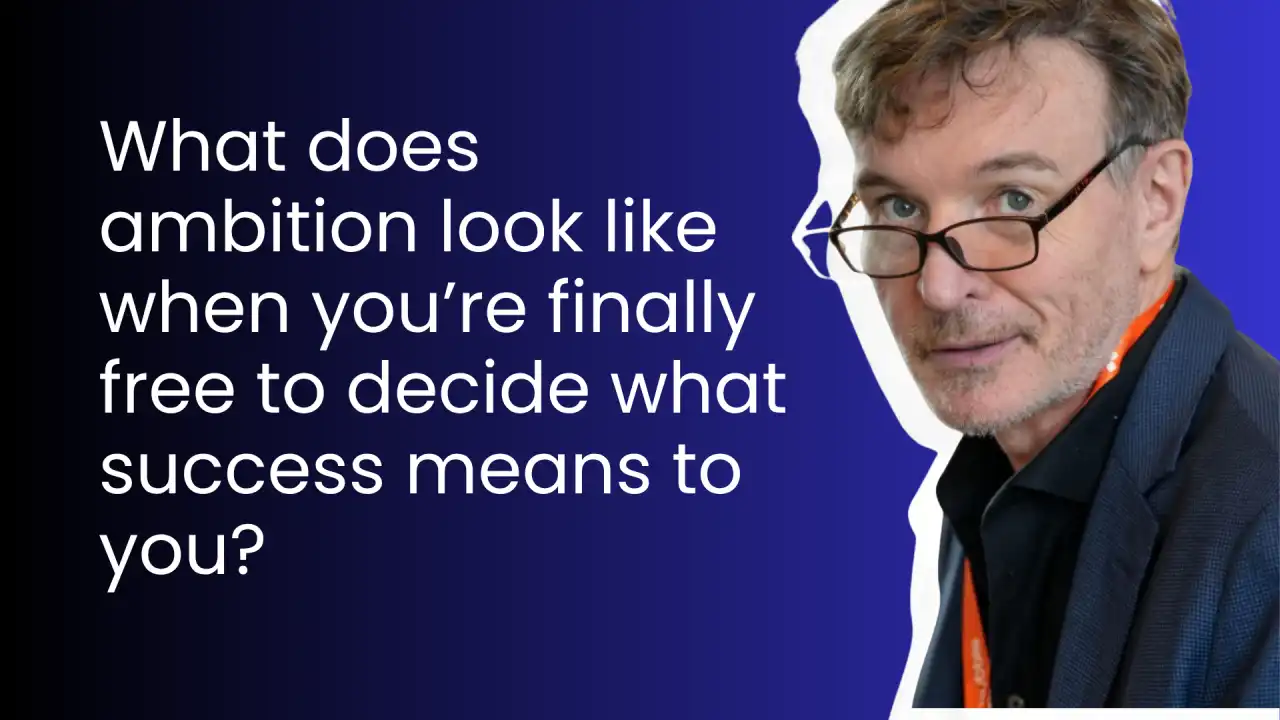
I’ve been wondering whether we sometimes confuse becoming less interested in traditional career progression with becoming less ambitious.
After decades of pursuing promotions, bigger responsibilities and professional recognition, it’s perfectly reasonable for our priorities to change. But does wanting something different mean we’re any less driven?
There’s some interesting research suggesting that ambition doesn’t necessarily decline with age. However, what motivates us and how we define success can change considerably.
The psychology of ambition changes with time
Stanford psychologist Laura Carstensen developed what’s known as socioemotional selectivity theory. Her research shows how our perception of time influences the goals we pursue.
When we see the future as relatively open-ended, we tend to prioritise opportunities that expand our knowledge, experience and future possibilities. As we become more conscious of time, emotionally meaningful goals, relationships and experiences become more important.
This isn’t exclusively an age-related phenomenon. Research suggests that changing someone’s perception of their future time can influence their priorities regardless of their age.
I find this particularly relevant to second acts.
At 30, spending five years pursuing a promotion might make perfect sense. You’re building a career, establishing your reputation and creating future opportunities. At 60, you may still be prepared to invest five years in something demanding, but you might be more inclined to ask whether you actually want to spend those five years doing it.
Does ambition become less about accumulating opportunities and more about choosing the ones that are important to you?
We’re motivated by different things as we get older
A 2011 meta-analysis by Kooij and colleagues examined the relationship between age and work-related motivation. The researchers combined findings from 86 studies and involved more than 22,000 workers.
They found that increasing age was associated with greater emphasis on intrinsic motives, including the enjoyment and meaning derived from work, and less emphasis on some extrinsic motives, such as advancement and external rewards.
Of course, these are broad patterns. Plenty of people in their sixties remain motivated by money, recognition and career advancement.
That said, the findings help explain something I’ve noticed in my own second act. I still enjoy tackling problems, working with interesting people, developing ideas and learning new things. What has changed is that I now have more freedom to decide how I pursue them.
I can continue working in areas where I have considerable experience while exploring entirely new interests. I can invest time in building The Experience Exchange because I believe experienced professionals have an enormous amount to learn from one another. And I can pursue opportunities because I find them worthwhile, without needing to consider whether they represent the next logical step in my career.
Does ambition always have to mean something bigger?
One assumption I think we should challenge is that ambition must always lead to growth.
A bigger business, a more senior position, more employees, and more money are familiar measures of success in corporate life. They are perfectly legitimate ambitions.
But after a successful first career, do we really need to keep using the same measures?
Maybe you want to advise a handful of organisations rather than run one, or you want to mentor younger professionals without managing a large team. Maybe you want to work three days a week and spend the rest of your time on interests you’ve neglected for years.
I don’t see any of those choices as inherently more ambitious than the others. I do think it’s important to distinguish whether you’re pursuing something because it matters to you, or because it’s what you’ve spent your professional life being rewarded for doing, though.
Experience can make new ambitions possible
We tend to associate entrepreneurship with younger people, but research says differently.
A study by Pierre Azoulay and colleagues examined the ages of business founders in the United States. They found that the average founder age among the fastest-growing new businesses was 45. They also found that relevant industry experience was strongly associated with entrepreneurial success.
That doesn’t mean everyone should start a business later in life, or that experience guarantees success. But it challenges the idea that our most productive years must be behind us once we reach a certain age.
By 60, you may have developed considerable judgement, strong relationships, a deeper understanding of people and the ability to recognise problems worth solving. These are all valuable assets.
I’m discovering that my own second act involves an interesting combination of drawing on decades of experience and becoming a beginner again. There are areas where I have considerable knowledge and others where I have plenty to learn. I find this energising.
Perhaps the greatest luxury is choosing your ambitions
One thing I’ve discovered since leaving corporate life is that having more freedom doesn’t automatically mean having more free time.
It’s so easy to fill your calendar with new commitments and, when you’ve spent decades working at a high intensity, being busy can feel reassuringly familiar.
I’m becoming more aware, though, that having the freedom to choose what I do is only valuable if I use it deliberately. That means asking questions I probably didn’t spend enough time considering earlier in my career.
These could be: Do I genuinely enjoy this? Am I learning something? Is this a good use of my experience? Am I working with people I enjoy? Is it worth the time I’m giving it? What am I giving up to pursue it?
At this stage of life, health, relationships and time outside work deserve a place in those decisions. Ambition doesn’t have to compete with these things, but it does have to accommodate them.
What are you ambitious for now?
Rather than immediately deciding what you’re going to do, I think ask yourself these questions first:
1️⃣What still excites you? Which parts of your working life would you genuinely miss?
2️⃣What do you want to learn? Is there something you’ve been curious about for years but never had the time to explore?
3️⃣Where could your experience make a difference? Who might benefit from what you’ve learnt?
4️⃣What are you no longer prepared to sacrifice? Your health, family time, independence or the freedom to choose how you spend your day?
5️⃣What would success look like if nobody else needed to be impressed by it?
I suspect that last question is particularly difficult for people who’ve spent decades in senior corporate roles. We’re accustomed to visible measures of achievement. Once those measures become less relevant, we have to decide what progress means for ourselves, and that takes some getting used to.
I haven’t become less ambitious. But I’m reconsidering what ambition is for.
I still want to build things, contribute, learn and work with interesting people. I also want to make time for my health, relationships and the things I enjoy outside work.
I don’t consider those ambitions contradictory. Nor do I assume that what matters to me at 62 will be what matters to me at 70. That’s part of the opportunity a second act presents.
The research suggests that our motivations often change as we age. My own experience suggests that those changes can be an opportunity to make more deliberate decisions about how we spend our time.
Are the ambitions you’re pursuing today still the ones you would choose for yourself?
__
If you’re deep in your own second act, or thinking of starting one, The Experience Exchange podcast is full of tips and tricks to ensure it’s a successful one. Take a look at the episodes here.