
Giving Back: The Privilege of The Second Act
Most conversations about a second act centre on reinvention.
The new business, portfolio career, advisory work, governance roles, travel, finally learning Italian, buying the cottage in the countryside you once talked yourself out of because there was never enough time to enjoy it… the list goes on.
All of that’s important, but I’ve come to think there is another dimension that deserves more attention: giving back.
The older I get, the more I realise that one of the genuine privileges of a second act is autonomy and the chance to decide where you actually want to direct your energy, influence, and in some cases, capital.
For me, much of my earlier charitable giving came through experiences that touched my family directly. My son was born with Tetralogy of Fallot, which brought organisations like HeartKids Australia into our lives. My mother lived for many years with scleroderma and Raynaud’s phenomenon, supported by communities that help families.
These causes have been important to me because life placed them directly in front of us.
Stepping out of corporate life opened a broader question: What causes do I now choose deliberately?
When I established Velten Advisors, one of the principles I built into the business from day one was that a portion of revenue would go towards education, particularly for girls, along with children’s and women’s health initiatives.
The reasoning was that I have always believed education remains one of the most powerful mechanisms for changing the trajectory of one’s life.
The harder part, though, is deciding where contribution genuinely translates into impact.
That question began answering itself when I encountered the work of Cambodian Children’s Fund when we hosted Scott Neeson and his team at The Experience Exchange earlier this year.
Scott’s story is, on one level, extraordinary. After a highly successful Hollywood career, including leading international operations at 20th Century Fox and overseeing global releases such as Titanic, Braveheart, X-Men and Star Wars, he walked away from it entirely. He sold the house, the boat, the cars, and moved to Phnom Penh to establish what became the Cambodian Children’s Fund.
The part of the story that left the greatest impression on me was how it all began.
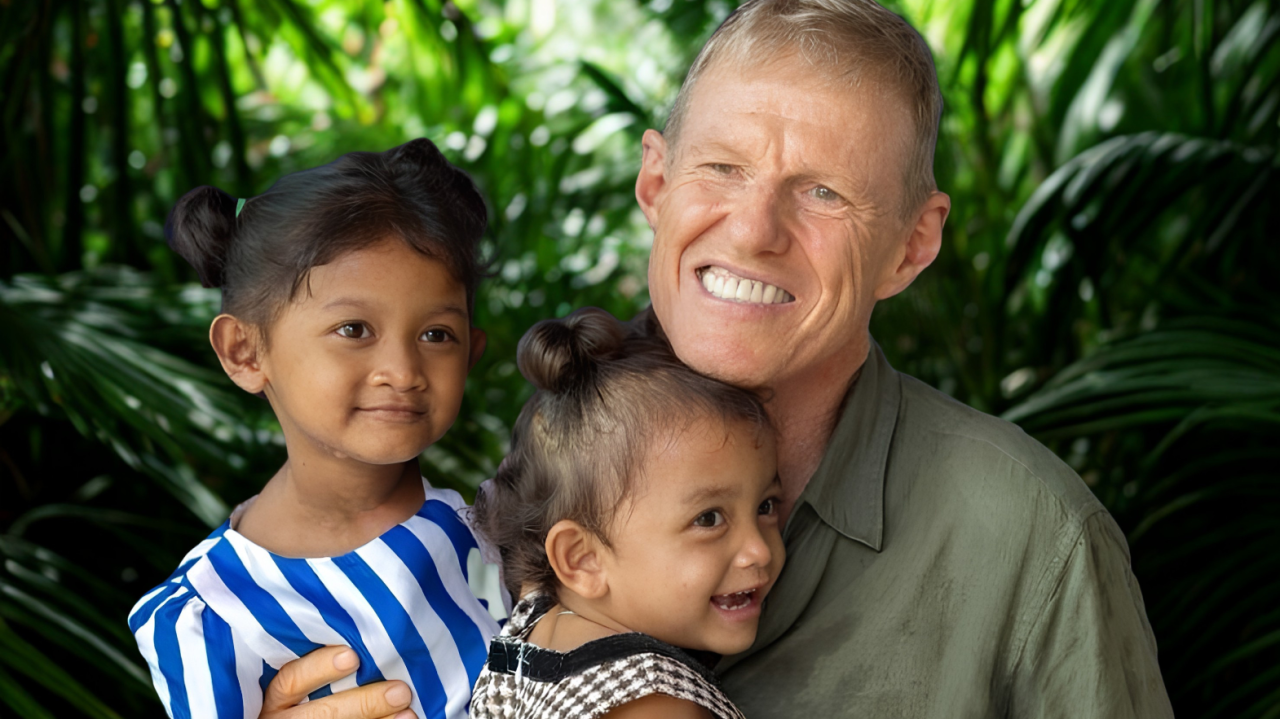
On his first visit to the Steung Meanchey rubbish dump in Phnom Penh, Scott expected children to ask him for money. Instead, one child asked to go to school. So, he arranged accommodation for the family and organised schooling.
The next day, more children asked the same question.
At some point, as Scott describes it, he realised that if it was possible to help a handful of children with relatively little effort, why stop there?
Giving often feels like something grand or institutional. Yet many forms of impact begin in remarkably small ways.
Today, Cambodian Children’s Fund supports thousands of children and families through education, healthcare, community development, and leadership programmes. What I find especially compelling is that many of the original children supported by the organisation are now adults mentoring the next generation themselves.
That may be the most meaningful form of legacy there is: creating a cycle where recipients become contributors in turn.
In many ways, that feels central to what a second act can become. You’re not trying to relive the first act or retire in the traditional sense. Rather, it can be a phase of life where experience becomes transferable, and contribution is more intentional.
There is also something liberating about recognising that impact does not require extraordinary wealth.
A gift of US$25 can provide a school starter pack for a child through CCF. A recurring US$25 monthly contribution can help send 10 children to school each day.
Those are not impossible numbers for many professionals reading this, which perhaps brings us back to the central question: What becomes possible when we stop thinking of giving as something reserved for later, larger, or more perfect circumstances?
We did manage to get Scott on with Pippa Woodhead for an episode of The Experience Exchange Podcast. Very exciting! I hope you’ll listen when it releases. More on this soon.
To finish off, I want to pose a question many of us entering a second act eventually confront: What do we want the next chapter of contribution to look like?
Subscribe and listen to The Experience Exchange podcast.
To ensure you get notified each time a new episode drops, subscribe to my newsletter.